
Farm News | May 25, 2026
Deer, Dogs, Birds and Fences – a Farm Conflict
A sad event, plus some big questions that we haven’t written about much, but we think about all the time…

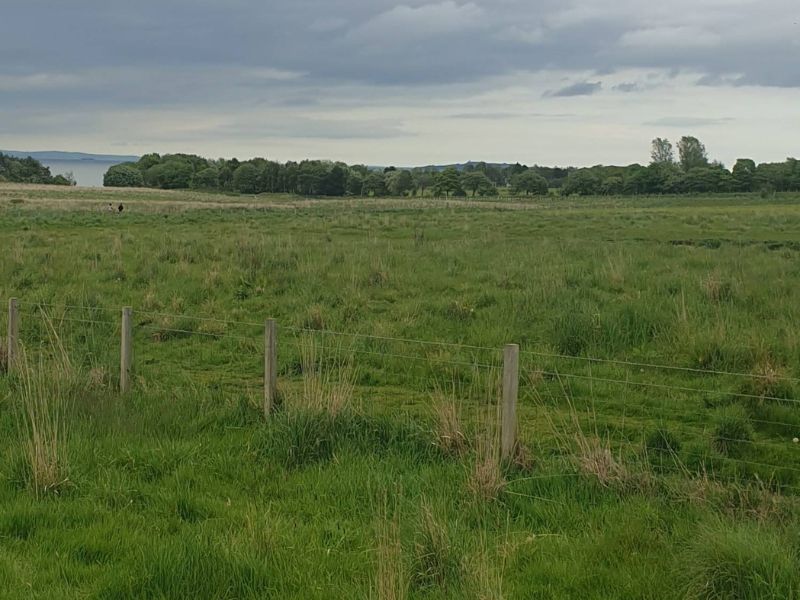
Recently, some events have brought a deeper tension to the surface. The first event, a sad one. A deer got caught and badly injured on the stock fencing, and was euthanised by the SSPCA. Members of the public who found the deer have since approached us to raise their concern about the fencing, questioning its purpose and asking us to take it down. This is very understandable; we also feel sadness about the death of the deer, and empathy for the people who found the deer.
Then, we got a comment on Facebook, under a reel reminding walkers to be aware of ground nesting birds, asking whether we had checked for ground nesting birds before doing some work with the tractor in the crop field.
A fair question. A question that gets to a deep tension in food and farming in our culture. How do we live with any accidental harm we do while growing or harvesting our food? How do we farm alongside wildlife? These dilemmas sit uneasily on us all the time, and we don’t have simple answers.
Agroecological farming means working farms can become healthier ecosystems, with many more species doing better than on industrial farms. Agroecology promises more habitat, and more biodiversity. It doesn’t promise that individual animals will never be displaced or come to harm on a farm.
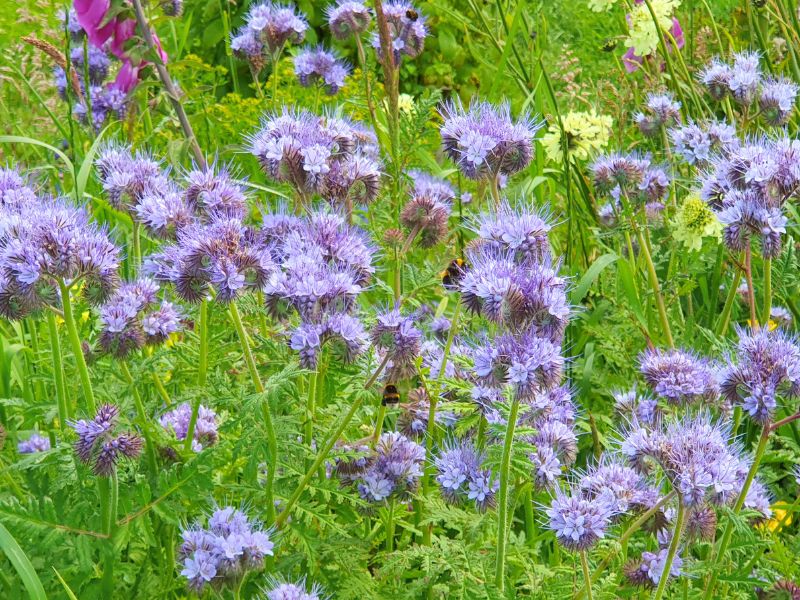
Beneficial plants for soil health and pollinators
Some Background on the Fencing

For those who don’t know, the previous farmer at Lauriston Farm kept sheep, the whole 100 acres was not accessible to walkers, and the fields nearest the shore were popular with coastal birds. These included curlew – whose numbers are declining rapidly in Scotland and beyond.
When we took on the farm in 2021, we installed stock fencing around the north and middle fields. We planned to bring in cattle for seasonal grazing, to build habitat and soil health, helping bring back much more biodiversity. For the north field, we saw a space for ground nesting species in spring and summer, and for overwintering curlew, other waders and geese. For the middle field, a space for grains, beans and vegetable crops. Cattle were going to be part of the picture for both fields.
However, the stock fences were vandalised not long after installation, and repairs were also cut. We had to cancel the cows who were due to arrive, and put off livestock plans until we could establish a solution.
These fields are a vital part of Lauriston Agroecology Farm’s potential.
The north field can be an undisturbed space for wildlife away from the cropping areas, and the middle field is crucial to grow crops that will feed substantial numbers of people. They could have healthy ponds, and a great variety of plants. Together, these fields can support much more biodiversity and a healthier ecosystem.
Can We Make Space for a Species in Crisis?
We are aiming to get a whole, functioning ecosystem at the farm. It’s not a conservation project for one specific species. But, there is one species who are in obvious need of some extra help. Lauriston Farm has always been an important spot for a local population of curlew.
“Curlews sit at the crossroads of today’s biggest environmental challenges — intensive agriculture, unsustainable predation, forestry, development, disturbance and climate change.” (Curlew Action)
Curlew numbers are falling rapidly, and they’re on the Red list of the UK’s Birds of Conservation Concern. When the sheep were moved out of Lauriston Farm, local bird watchers and ecologists were dismayed to watch the birds disappear as walkers with dogs arrived.
We want people on the land, and we also want to give the birds the space they need.
Access for Connection
The nature emergency has been going on for decades, and most people aren’t aware of all the species dwindling and disappearing. That’s because most of us have been cut off from access to land, and haven’t grown up with wild kin around us. We don’t really know them. So the access rights are essential, and so is learning about who else lives here, and what they need. It’s tough to realise that beloved pets are a problem for wildlife, and it can be hard to balance the needs of both. We put out signs, messages and waymarked posts to try to help people access the farm in a way that works for wildlife too.
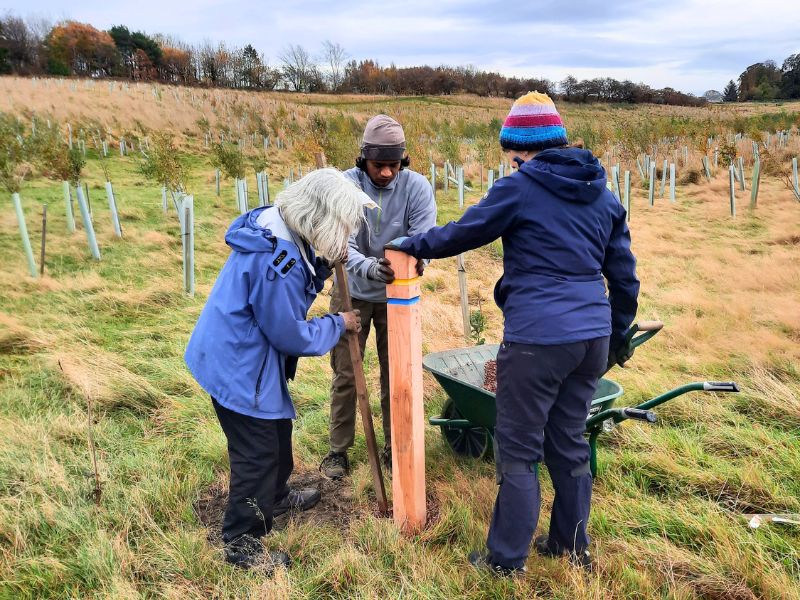
Volunteers helping install waymarked walking routes at the farm
Birds and deer need us at a safe distance, with no offence meant.
Many folk choose to stay out of the north field to leave the birds undisturbed, and are very skilled at handling their dogs wherever they go.
But not everyone.
We regularly see dogs chasing birds and deer at the farm. We hear from people who’ve been scared and sometimes threatened by dogs and their guardians, and this has also happened to our staff. Two workers have been bitten. The ponds are not developing because dogs are churning up the banks. We are concerned about flea and tick medication getting into the water and killing invertebrate life, and dog waste affecting the soil. We know the curlews will struggle over winter if they can’t settle in the fields. We are heart-set on this being a safe place for them.
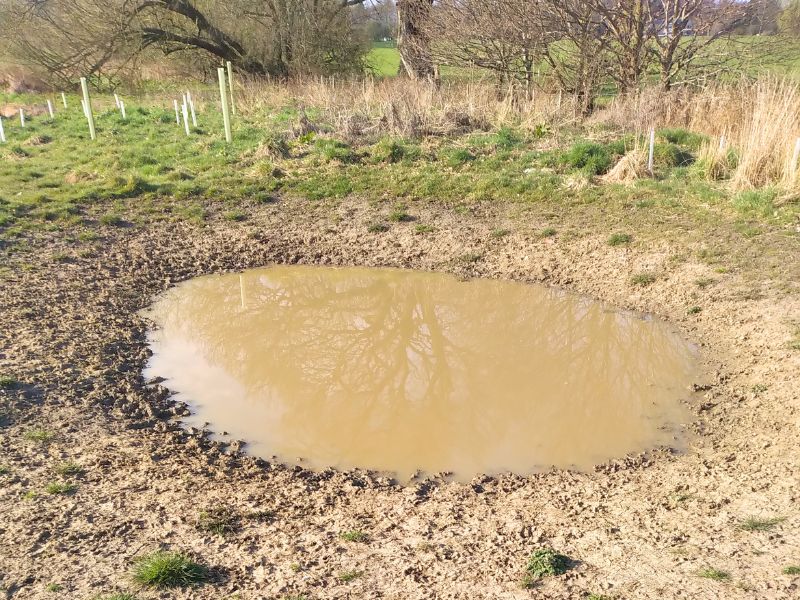
A lifeless pond due to constant disturbance
There is some irony in trying to use a fence to address these issues, when it’s the disconnection that’s the problem. But the birds can’t wait.
What To Do About the Fence?
For now, even with its problems, we still think the fence we have is better than nothing for the coastal birds.
We also haven’t given up on bringing in grazing livestock – all the potential ecosystem benefits still apply. And the middle field still needs some protection. At the moment, it’s planted with a green manure to help the soil. It may not be obvious it’s a crop field when you see it now, but this will become clearer.
Deer can usually jump fences this height and much higher – the deer who died had an unlucky accident. Long-term, we are open to alternatives: perhaps more hedgerow, which will take time, or a different fencing system for livestock, which will take budget. But, meanwhile, we are reviewing what we could do to add some protections for deer and other mammals, with advice from our ecologist.
What About Wildlife When Working in Crop Fields?
Robert Burns named the problem in 1785 in the poem Tae a Moos, after he accidentally destroyed the wee mousie’s nest with the plough. 240+ years later we’re still grappling with it. Supermarkets are full of food from giant farms where huge machines speed across the land, taking out all life in front and behind. Here at Lauriston Agroecology Farm, we are much closer to Burns than to agribusiness, and totally aware of farming alongside wild kin. We face this reality doing essential work on crop fields. We can mow around nests with our small tractor. We will never spray crops with pesticides. But many agricultural activities still pose a danger for wildlife. Which is a big part of the reason the north field matters so much to us as a safe place for them.
Help Make the Farm
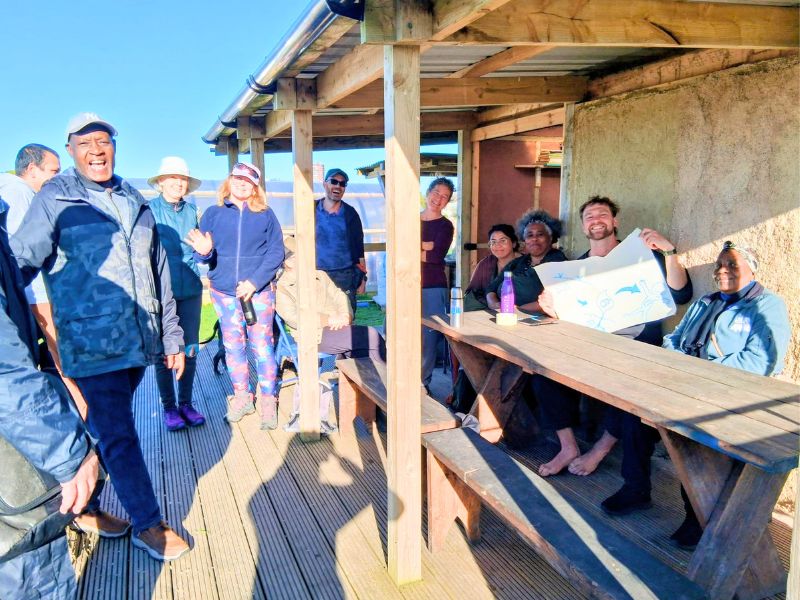
Community allotments group for the new polycrub and soil health
After five years of being here, we have a very active and engaged community of allotment plot participants, volunteers, and Community Supported Agriculture members, plus land partners, who are all shaping the farm alongside us. As are the wild kin (though they mostly don’t come to meetings). The work is hard and we face many challenges, from the ones we’ve talked about in this article, to the wider food system and changing climate. But here we all have the opportunity to do something to make a difference. Lauriston Agroecology Farm is hope in action. If you would like to get involved, we would love for you to join a volunteering session or event – click here to see the calendar, or sign up to our newsletter so you know what’s going on.