
Farm News | April 27, 2026
Field Notes from Propagation Season
The growers take a look back at the 2026 propagation season in the Market Garden and food fields…

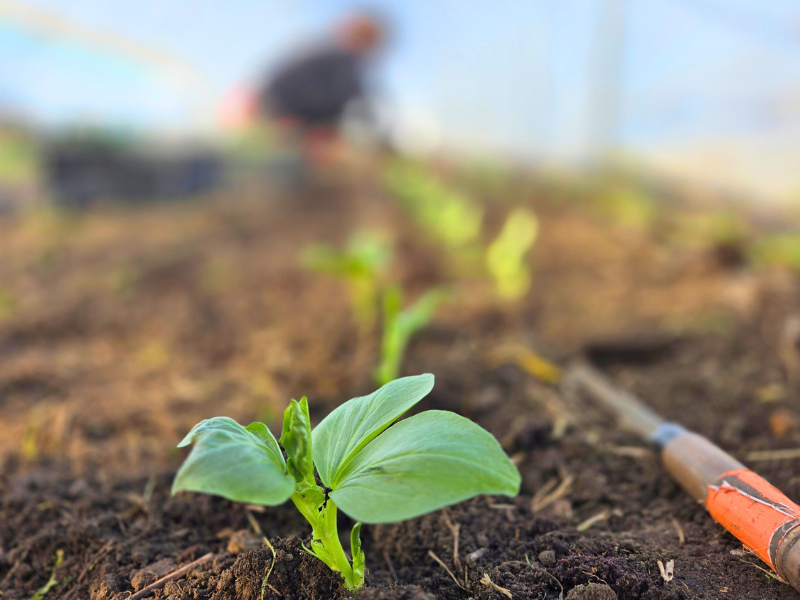
Feels like a big chunk of time to catch you up on all the goings on in the market garden and food fields…
‘Invisible’ Work and Developing Water Infrastructure
If you’ve passed by the west gate recently, you may have noticed three massive black tanks have appeared. These are for storing water (including rainwater that we will harvest from the packshed roof).
A huge amount of ‘invisible’ work happens everyday in the market garden and fields as we invest time, money and energy into developing robust systems to underpin our production. Water management is a key focus for us this year, with the Met Office predicting it will be another one of the hottest ever recorded worldwide.
We were able to invest in the tanks, along with other kit, thanks to grant funding from the Small Producers Pilot fund. We were successful in our collaborative bid between the land partners to strengthen on-farm water management. We can now develop improved storage, efficient irrigation, and increased protected cropping space.
We hope this means improved resilience across all land partner projects. We are building shared resources to better withstand climate shocks, value precious water, and maintain productivity under increasingly uncertain conditions. Such investment helps safeguard the businesses, but also contributes to long-term food and herbal medicine security, ensuring a resilient and reliable food supply in a changing climate.
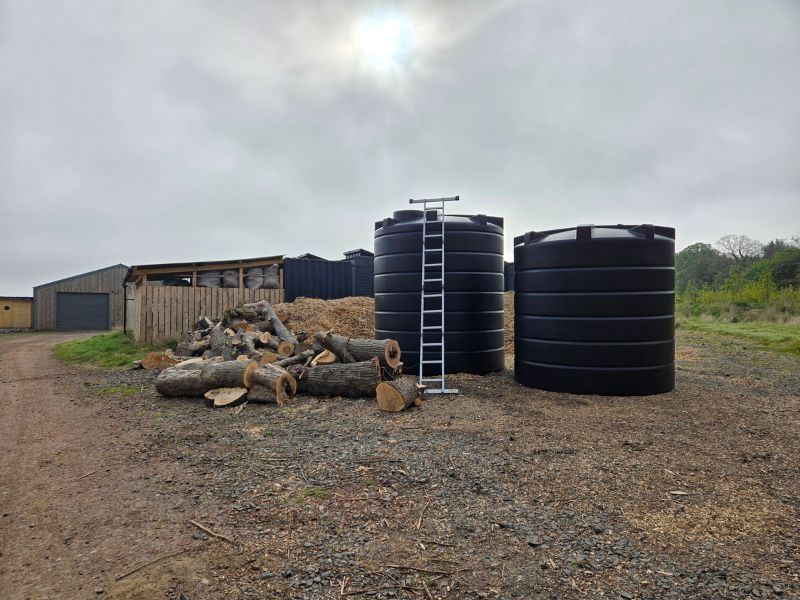
Water tanks ready for installation
Sowing in the Tunnels and Across the Market Garden
In March and April, all green things are picking up the pace and we need to step it up with them. So far this year, we’ve sown nearly 38 thousand seeds by hand into blocks in our propagation tunnels (and any other spaces we can fit them), and many more direct into the beds outside.
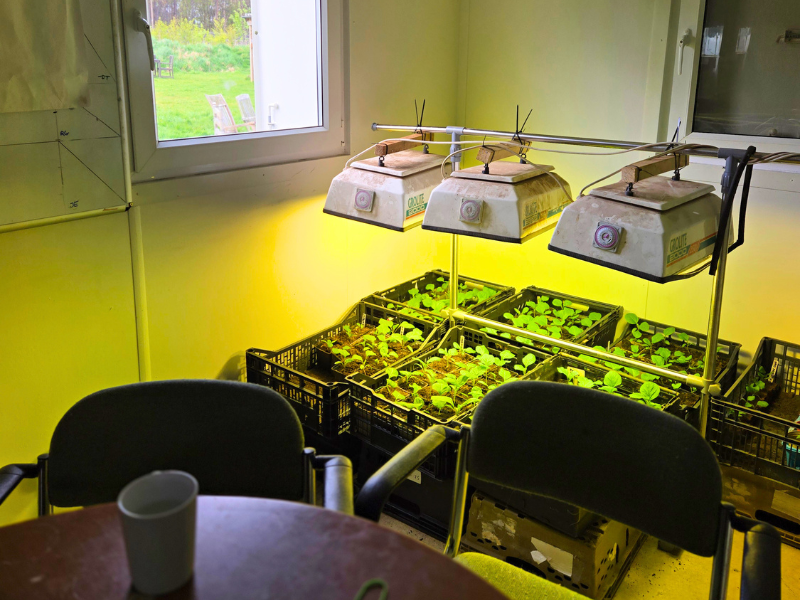
Aubergines growing in our office
We’re looking forward to our fifth growing season on the land with lots of delicious veg underway and more to come. Our CSA members for the season are joining up and we can’t wait to be sharing wonderful veg with everyone soon.
With the core team picking up pace, we have been immensely grateful to welcome back our Tuesday morning volunteers, who join us to help with big jobs. It’s a real pleasure to be able to make a team with the fab folk who turn up, and get through a power of work. There’s been lots of bed prep, sand bag filling, tarp wrangling and more. Many hands really do make light work! If you’re interested in joining future sessions, sign up on the events calendar
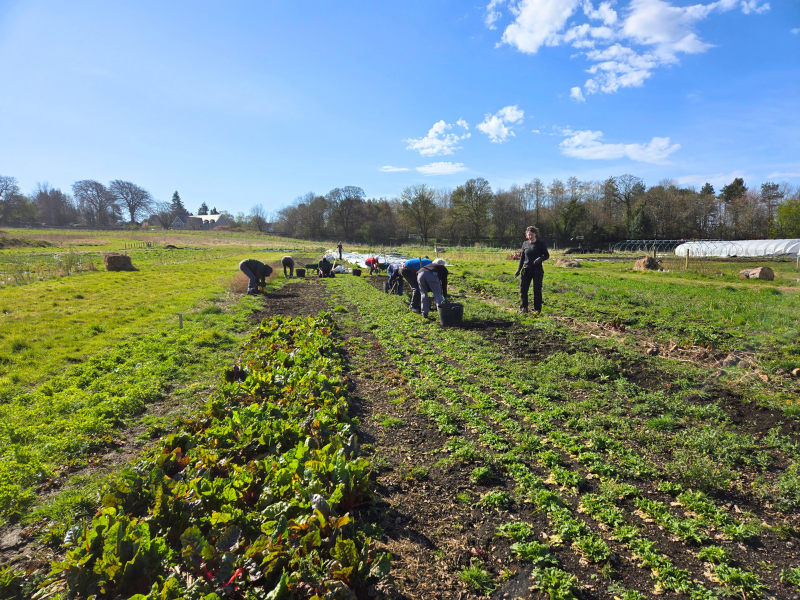
Volunteers helping prepare beds ready for transplants
Continuing Our Work on Seeds
We’re growing Desert Spirit squash again for Seeds of Scotland after a very successful seed crop last year. Here’s hoping we can fend off the slugs again for these beauties.
In collaboration with Upper Ballaird Market Garden we’re continuing BeanQuest! With support from the Royal Society of Edinburgh Catalyst Award we will be trialling different varieties of dwarf drying beans, aiming to discover which bean varieties can thrive in Scotland’s market gardens and provide tasty, nutritious legumes for local diets.
We also shared some research on Aerated Compost Teas that we experimented with last year, and are looking forward to continuing to explore homemade amendments to support our crops this season.
We’re continuing to collaborate with the Crowdbreeding Network, where we grow, save and mix seeds with other farms, to develop more diverse, resilient landrace* varieties, including broad beans, collards and summer squash.
And we were delighted to host members of the Scottish Seed Hub for a planning meeting about seed crop production this year. The Seed Hub aims to launch a new catalogue of Scottish-grown seeds in 2027.
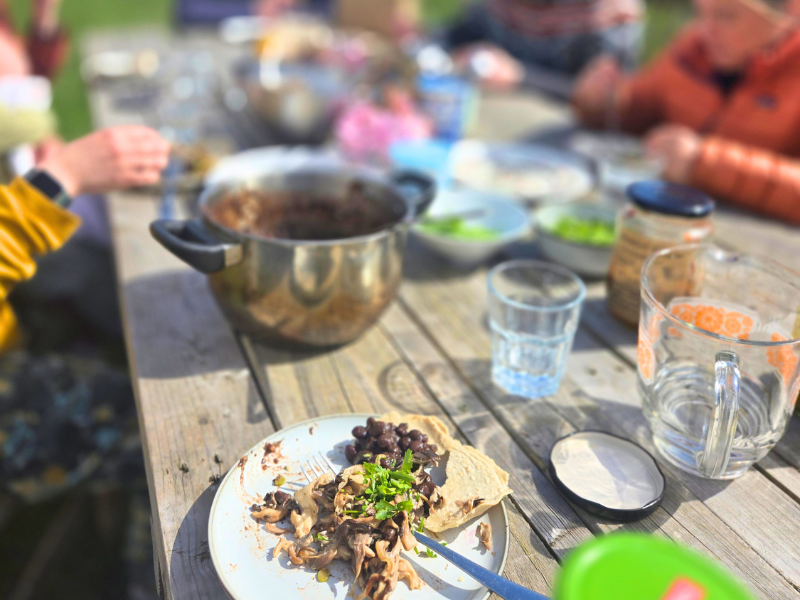
Eating and planning seed production with members of the Scottish Seed Hub
More Alley Trees and Grains
Further up the fields, the sharp eyed may have noticed we have planted more treelines to make alleys for food growing. The trees are a mix of Birch, Alder, Hazel, Elder, Rowan and Field Maple. As they grow, they will provide protection for the crops in the field, as well as increasing biodiversity, creating habitats and supporting soil health.
The easterly alleys in the field are under green manure, and the western end has three acres of our Granton Rouge D’Ecosse winter wheat, growing well. This grain is all growing from seed that has been saved and bulked up over a number of years, first by Granton Community Gardeners, and then on the farm. It is north Edinburgh’s own wheat, and the plan to be able to supply Granton Garden Bakery is coming together. We’re excited to eat really local loaves, and continue our collaborations with partners across Scotland to rebuild small grain networks. To help the wheat along, Dav and Ruth have both been out weeding with the tractor tine.
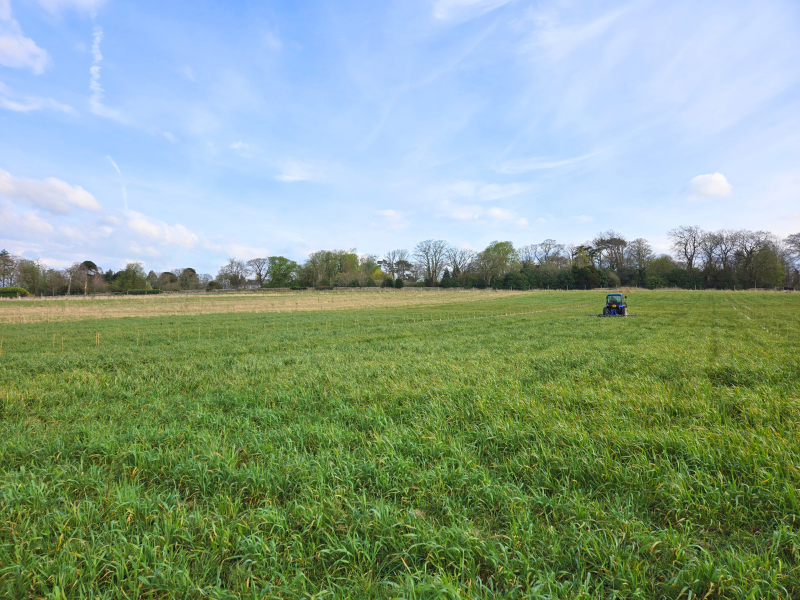
Weeding the winter wheat
We can never know what the growing season will bring, but we’re off to as good a start as we can be in 2026 – stay tuned!

*A ‘landrace’ is a variety of farm crop, or species of farm animal, adapted and bred for the local weather and soil conditions. Landrace varieties become part of a region’s culture and character, and can be crucial to survival in that area. They are a legacy, handed down through generations of farmers, for the benefit of their communities. They are also adaptable, as long as farmers have the knowledge and freedom to do their own selection, and to share with other farmers.