
Farm News | November 11, 2026
Results of the Butterfly Survey 2026
Butterfly Conservation volunteer Huw Pennell shares the 2026 survey results…

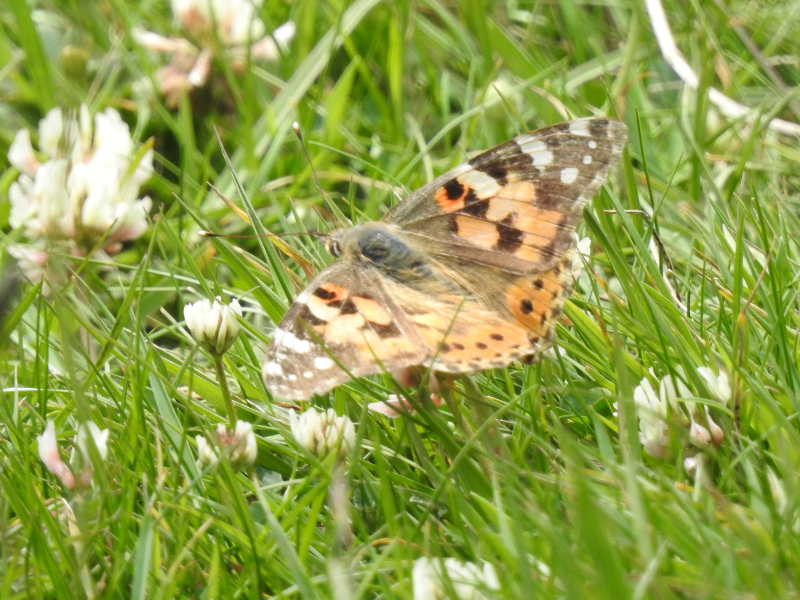
Butterfly surveys have been taking place on the Farm since 2023. We caught up with Huw from the surveying team for an update on this this year’s results and highlights.
How have butterflies fared on the farm this year?
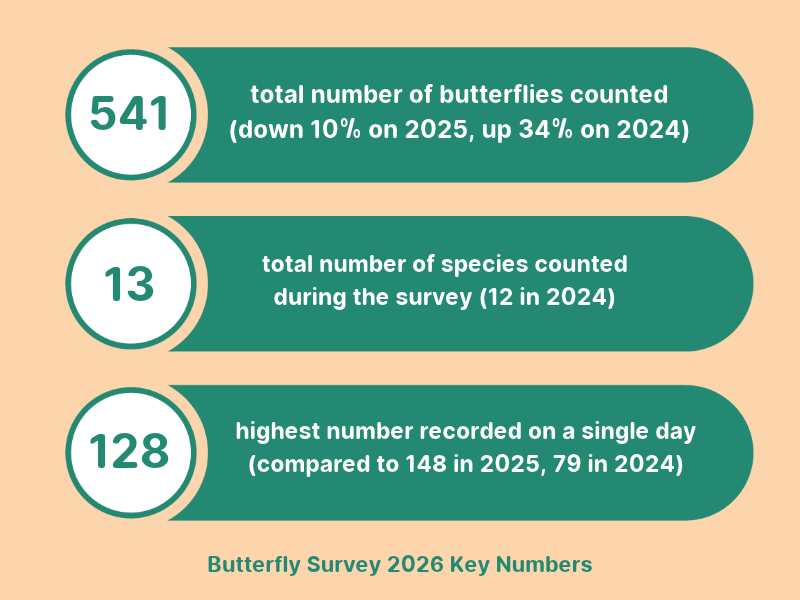
This year saw another strong year in overall numbers of butterflies recorded on the Farm. We had a continuing positive recovery of the Meadow Brown and Ringlet grassland specialists (+50% from 2025) offset by a decline in the Large White, and Small White species (-45% vs 2025). Recordings were 10% down on 2025, although they were still an increase of 34% on 2024.
What has driven the decline in the Large and Small White numbers?
After last year’s bumper numbers for the Large and Small Whites, this year saw a drop of 45%. This is back down to numbers similar to those recorded in 2024. Both these species use cultivated brassicas as the food plant for their caterpillars. We haven’t seen a significant shift in the growing of brassicas on Lauriston Farm, but last year the neighbouring farm did grow rapeseed (a member of the brassica family) on the large field adjoining the farm, while this year they tried to grow field beans, which failed. Whites are strong and mobile flyers, so it could be that last year’s bumper numbers were driven by the neighbouring brassicas, attracting Whites to the area. Added to that, Large Whites are also prone to ‘boom and bust’ cycles, linked with the parasitic wasps that feed on their caterpillars. Last year’s ‘boom’ could have led to more parasitic wasps, and so to lower numbers this year. Although we can’t be sure, these seem to be the most likely ‘local’ explanations for the changes in their numbers in our survey.
What has helped the recovery of the grassland butterfly specialists?
The continued upward warming weather trend benefits the Small Skipper. Although we didn’t see as many as last year, the Small Skipper was the third most recorded species on the Farm, behind the resurgent Ringlet (+41% from 2025) and the Meadow Brown (+30% from 2025). They seem to be recovering from the challenges of the very cold and damp Spring of 2024. All three species are on the wing during the summer, but have a limited flying season of between 6-8 weeks. The Small Skipper and Ringlet appear first in June , followed by the Meadow Brown in July through to early August. They each have slightly different grassland habitat preferences, with the Ringlet preferring slightly damper conditions compared to the Meadow Brown, while the Small Skipper needs tall grasses – especially Yorkshire Fog. Yorkshire Fog is the favoured food plant of Small Skipper caterpillars. The Lauriston Farm grasslands are a haven for these three lovely, summer flying butterflies.

Small Skipper
A Painted Lady Summer at Lauriston Farm
2026 was the year of the Painted Lady in the UK, and Lauriston Farm was no exception. This is a remarkable migratory butterfly. They migrate between North Africa/West Asia and the UK in a multi-generational relay, with successive broods flying their own leg of the journey north before arriving here in mid-summer. The generation that arrives here lays their eggs on creeping thistles, and their offspring then start the migration south again, late in the Summer. This year’s surge in the UK was the second highest total in the 16 year history of The Big Butterfly Count, and the first year we found Painted Lady butterflies on the transects at the farm (with 16 sightings). Volunteer entomologist David Notton also found Painted Lady caterpillars feeding on Spear Thistle on the allotments, which could explain the sightings of fresh, bright looking Painted Ladies during August – a new generation ready to start the first leg of the long journey south.
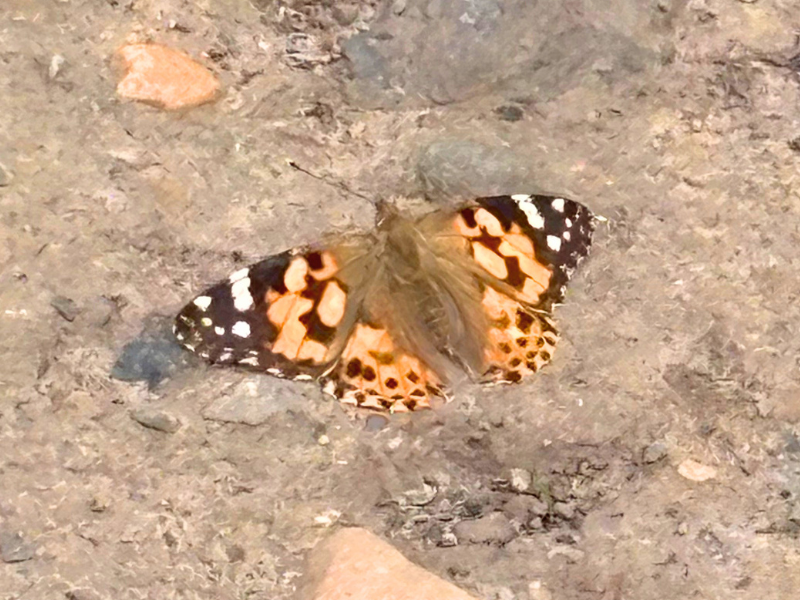
Painted Lady butterfly
A Disappointing Year for the Orange-tip, but a Record Year for the Peacock
The iconic Orange-tip butterfly, which was voted Scotland’s favourite butterfly, had its lowest recorded numbers on the Farm this year (10 sightings). Its flying season coincides with the appearance of its preferred larval food plants of Cuckoo Flower and Garlic Mustard (Jack-in-the-Hedge) during May. We are not aware of any habitat changes this year, but will investigate further in the new year, and consider whether there is an opportunity to plant Cuckoo Flower to help support this lovely Butterfly on the Farm. By contrast, the Peacock, which was voted the UK’s favourite butterfly, had its best recorded year on the farm with 26 sightings. Its preferred larval food plant is the common Nettle, particularly the large, south-facing patches on the Farm.
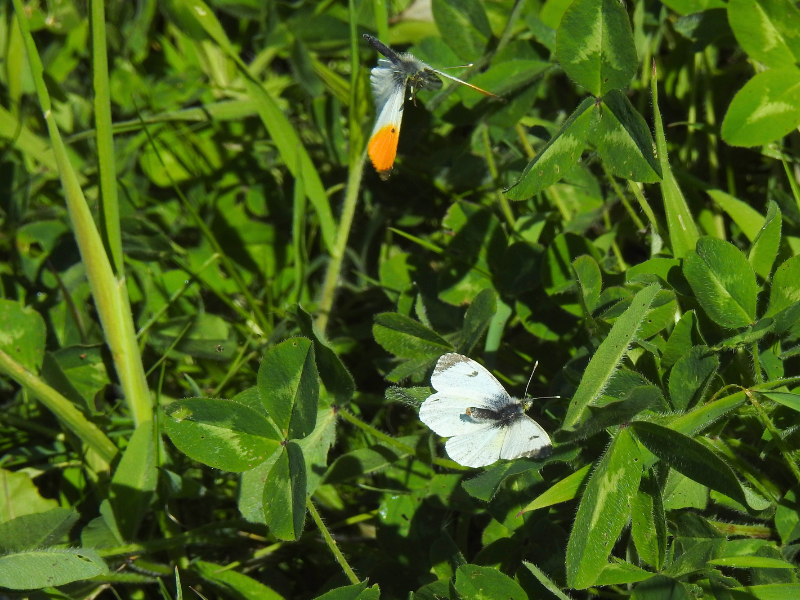
Two Orange-tip butterflies
2026 Survey Results Summary
Key Numbers
Of the 15 different species recorded over the last three years on the transect, seven species are in positive recovery, four are in decline and four are stable.
Top Ten Species
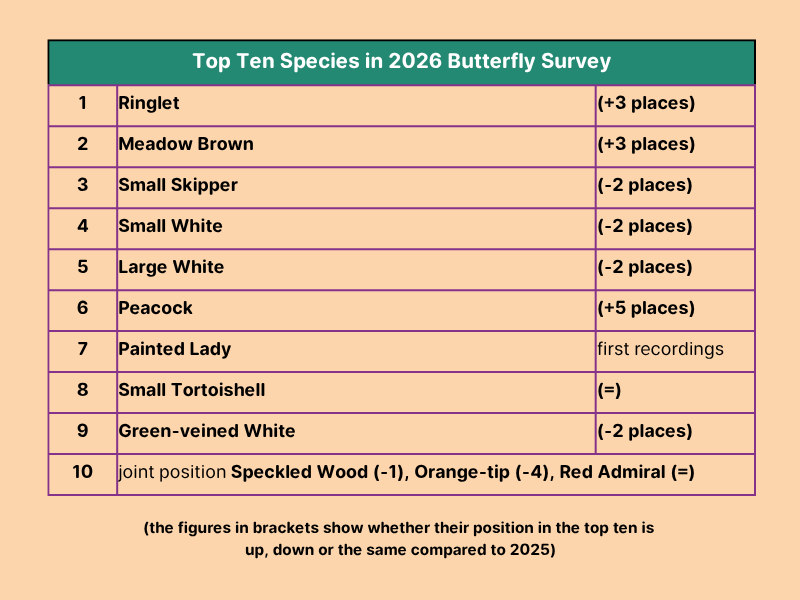
(plain text version at the end if these images are not accessible to you)
Earliest and Latest Flyers
Earliest recorded species: Peacock and Small Tortoiseshell (week beginning 1 April)
Latest recorded species : Red Admiral ( week beginning 7 October)
In summary
2026 saw ups and downs, but an overall continued set of strong numbers, especially for the grassland specialists. The arrival of the Painted Lady in good numbers made 2026 a standout year for this international traveller. With the continued focus on using farming methods that are designed to support biodiversity, we hope to see good numbers continue next year, and will be looking at how we can encourage more species to make their home on the Farm.
Thanks to Huw Pennell and Juliet Wilson for their continued surveying support and a warm welcome to Guy Holloway to the surveying team.

Links to Previous Year’s Survey Results
Plain Text Version of 2026 Results
-
Ringlet (first time ever) (+3 places)
-
Meadow Brown (+3 places)
-
Small Skipper (-2 places)
-
Small White (-2 place)
-
Large White (-2 places)
-
Peacock (+5 places)
-
Painted Lady (Not recorded before)
-
Small Tortoiseshell (=)
-
Green-veined White (-2)
-
joint place Speckled Wood (-1), Orange-tip (-4), Red Admiral(=)