
Farm News | February 27, 2026
Why We Save Seed
Lisa Houston takes a look at why we save seed, and some of the struggles between those who look after seeds for the benefit of their communities, and those who control them for power and the profits of their shareholders…

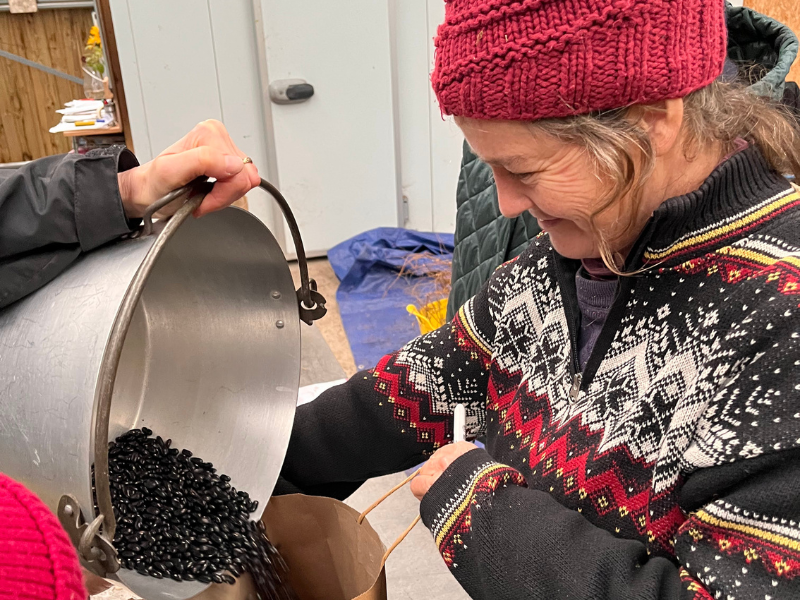
Before we shift into the busyness of growing season, it’s time to reconnect with our seeds. Sorting through the various tubs, jars and boxes of seeds that I have gathered over the last couple of years, I am filled with the now familiar feeling that touching seeds always brings. It’s one of abundance, gratitude and awe.
Abundance…
I have way too much for me to plant, I will have to share them with others. So many others have shared their seeds with me, and I feel connected and part of a network of land and people and plants across the UK and beyond, from the past, present and future.
Gratitude…
to the cycle of life that keeps on occurring through the millennia, to the people through the generations who have saved seed and passed on the seed from the tastiest and healthiest plants to others, often carrying them across land and seas to provide their food.
Awe…
the seeds sit, packed tight with DNA, energy and ancient knowledge, ready for the trigger to reconnect them with the life in the soil, the sun, the rain, the insects, birds and the air, when they will grow and flourish in tune with all the rest of life until finally returning to a sitting seed. Awe of how every seed tells a story of people from all over the world working the land and the soil they toiled, intimate with the plants that fed them, and how to maintain that supply of food through seed-saving. The story goes back and back.
Why We Save Seed
Seed saving is the natural thing to do!
Humans have been saving their own seed and sharing it with others for thousands of years. Seeds are at the heart of our food system, and we believe communities should be in control of their food system – which has to include our seeds.
In the UK we import over 70% of all our seeds (80% for organic seeds) to produce our food. Even if you buy from a UK company, it may have been grown in China, Israel, Italy or New Zealand (for example, most Musselburgh Leek seed is produced in Italy). That means the seed is not developed to suit our climate. It’s often grown on massive plantations with heavy use of chemicals, and without our knowledge of how the labour and land is treated. Commercial seed is also overwhelmingly controlled by four of the biggest chemical companies, who own 60% of our seeds between them (Corteva, Chemchina, BASF, BayerMonsanto). There’s a reason chemical companies control our seeds… They want farmers to use seeds that need the company’s fertilisers, pesticides and fungicides to survive. Most commercial seed is produced to suit the growing conditions for monocropped commodity farms, with big machinery and chemical stores who prize yield and transportability above taste, nutrition, suitability for small scale growers, culture and beauty.
We save seed because we want diverse and resilient seeds for food that tastes amazing, that is nutritious, that thrives in our soil, that is free from exploitation, that is beautiful and that brings us such joy and connection.
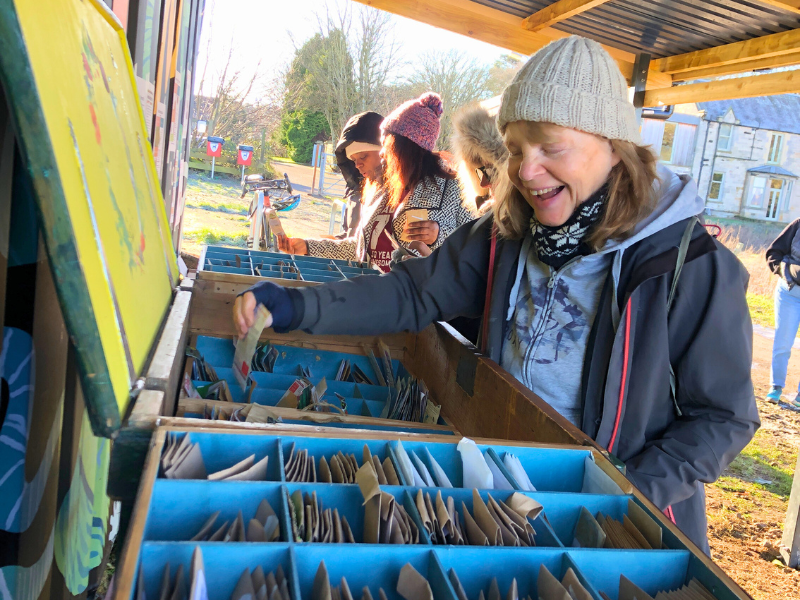
Seed saving protects diversity
It’s thanks to the indigenous practice of saving seeds through the millennia that we have access to a diverse range of fruits, grains, vegetables and herbs. This diversity has shrunk severely in the last 100 years, as companies took the seeds from our hands and bred them for the needs of the food corporations. They have cut 75% of genetic crop diversity in the last century. For example, at the beginning of the century, there were 544 commercial varieties of cabbage available, now there are 28. There were 408 varieties of tomatoes, and now there are 79. However, there is more diversity out there in the hands of those who have just continued to rely on their own locally grown and saved seeds, the indigenous communities who continue to treasure their seeds and share them in their communities.
Seed saving is decolonial
It’s also really important to know where your seeds come from because big corporations are doing their best to stop indigenous people from around the world from saving their own seed. Corporations are pushing for ever more aggressive new laws and regulations that criminalise farmers for sowing, keeping, exchanging, and taking care of their seeds. If companies get their way, farmers around the world will face the possibility of being jailed or harshly fined for doing what they have been doing over centuries. Governments are being pressured to include ‘UPOV’ regulations in international trade agreements. This writes breeder protections into law, effectively leading to the privatisation of seed, and the criminalisation of community seed-saving. The good news (sort of) is that communities are fighting back.
In Kenya, farmers fought back using the United Nations Declaration on the Rights of Indigenous People and won their case, hopefully setting a precedent for people to fight this around the world. British colonialism first started restricting and displacing Kenyan agriculture in the early 1900s, forcing indigenous farmers onto infertile land and making them work on European-owned farms and plantations, so they have fought to regain food sovereignty across multiple generations.
But heavy losses continue alongside the wins. In July 2025, the Israeli army destroyed the Palestinian seed bank in Hebron in the occupied West Bank, erasing heirloom varieties along with the tools, propagation materials, and infrastructure essential to food sovereignty. This article from La Via Campesina explains more about seeds as targets.
Seed saving builds community-sufficiency
If you have saved seed yourself, you probably selected from plants that have done well in your garden, and so you know the seeds are also likely to thrive. And, you will know the feeling of abundance that comes from realising how much seed the plants can give you – more than enough to share with others. Very quickly, you have good seeds you can give to others to grow food, and then they will get good seeds they can share too, and so on. This builds a resilience within the community, and a different kind of economy.
Sourcing ethical seeds
When you can’t save your own, there are some great seed companies in the UK. At the farm, we increasingly grow a lot of our own seed, but we also buy seed. We source from open pollinated, ethical seed companies like Seeds of Scotland, the Wales Seed Hub, Real Seeds, Vital Seeds, Winnow Farm Seeds, Scotia Seeds, Earth Song Seeds and Tamar Organics.
If you grow flowers, you might also want to know there is a group of florists, landworkers and gardeners building a boycott of Israeli bulbs, flowers and seeds in response to the apartheid and genocide in Palestine. Click here to see their guide to sourcing apartheid-free bulbs, flowers and seeds
The Open Source Seed Initiative is a great project, taking action to protect our seeds and to make sure that plant genes are kept in the hands of people and not tied up in patents, which is another tactic that corporations are using to prevent people from having control over their food systems.
We encourage everyone to try to better understand our seed systems, how to save seeds and why its important to buy seed from the right places.
Seeds are life – long live the seeds and let them be free!