
Farm News | June 5, 2026
Field Notes from May
The growers take a look back at May in the Market Garden and food fields…

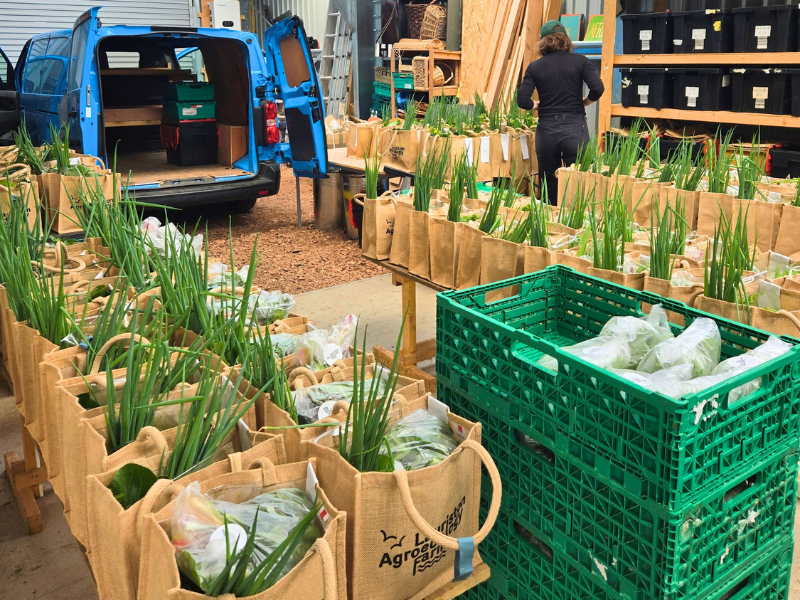
Growing Lovely Veggies

After a cool, slow start to the Spring we’ve suddenly heat upon us. It’s got to over 40°C in our tunnels even with the doors fully open. This is a challenging climate for us and plants alike. Despite some challenges with some of our early sowings and transplants (slugs and droughts feels like an unfair combination!) we’ve been delighted to start sharing out our Community Supported Agriculture (CSA) veg for the season.
With more members than ever before, and an earlier launch date, we were quite nervous about having enough to share. However, our first two weeks shares have gone out with some glorious produce including lush leafy salads, dried paprikas, various herbs, early kales, garlic, spring onions, radishes, pak choi and more. It can be quite surprising what seasonal eating can look like in Scotland.
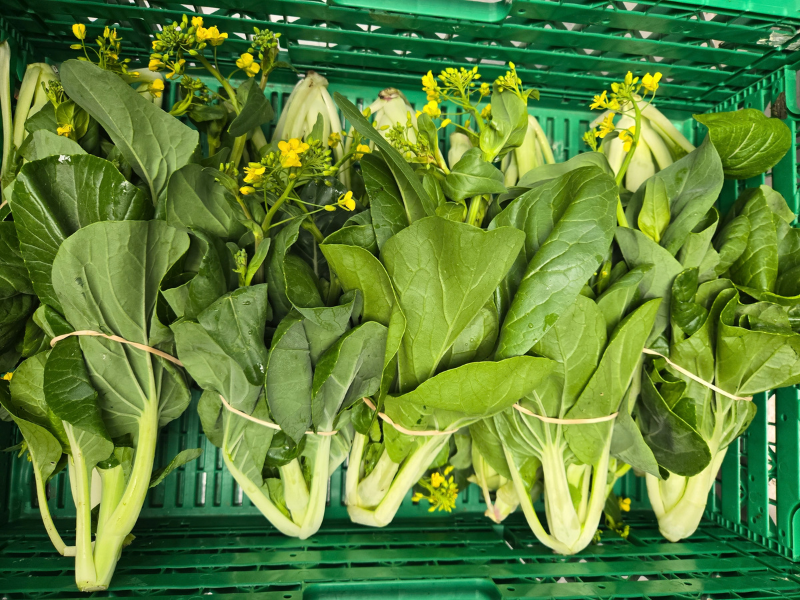
The tunnels and outside beds are filling up and we’re excited to share more diverse and delicious veggies as they come through.
We’re also going to be sharing more veg wholesale and restarting the market stall (on Thursday 2 July) as crops start really getting into their stride, so we’re definitely going full throttle, which is lovely but tiring!
Scaling Up in the Top Field
In the top field (inside the deer fence) you may have noticed cultivation in three of the alleys. We brought in a contractor to help and they have been seeded with Buckwheat, which is now germinating. We’re hopeful it can survive the dry heat. It’s part of our long-term cover crop strategy to convert this pasture into veg and grain production. The Buckwheat does a remarkable job competing with and suppressing the couch grass, which is our current biggest challenge for quality cropping in these fields. Once the couch grass is knocked back, these alleys will be sown with winter wheat.
And wheat is one of the crops you can see in the adjacent uncultivated alleys. Its looking lovely and green at the moment and heading up nicely. The Hebridean Rye (which you might glimpse as a purple haze) has a beautiful sea of heads forming. Both grains are part of ongoing collaborations with Granton Garden Bakery and other grainy pals to redevelop small scale local grain networks.
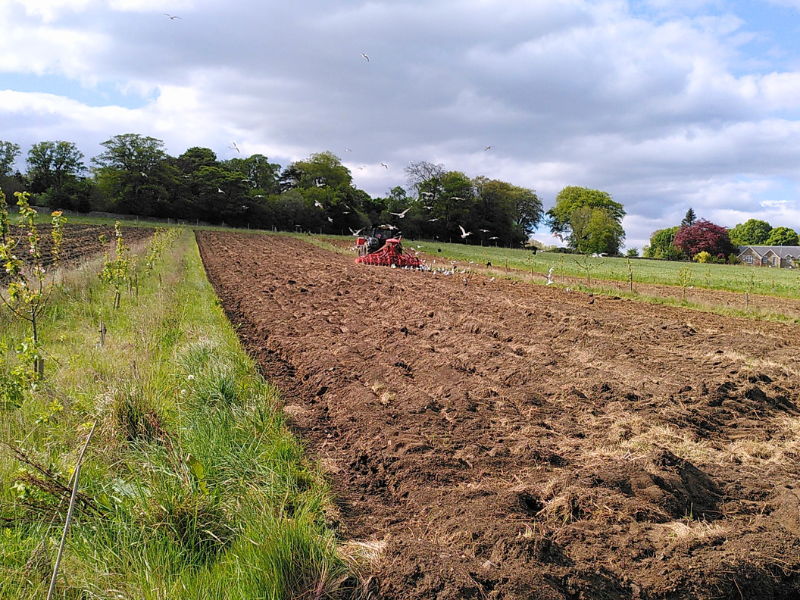
Sowing buckwheat (and feeding gulls)
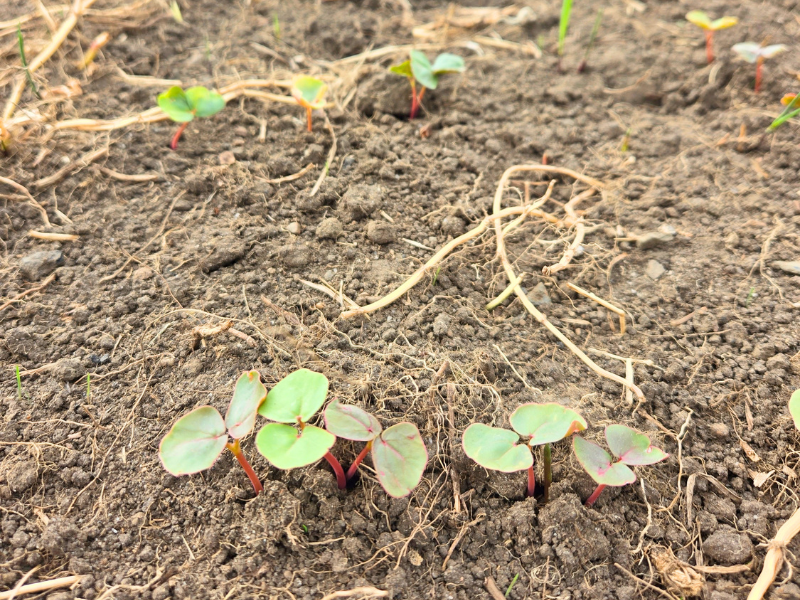
Buckwheat germinating
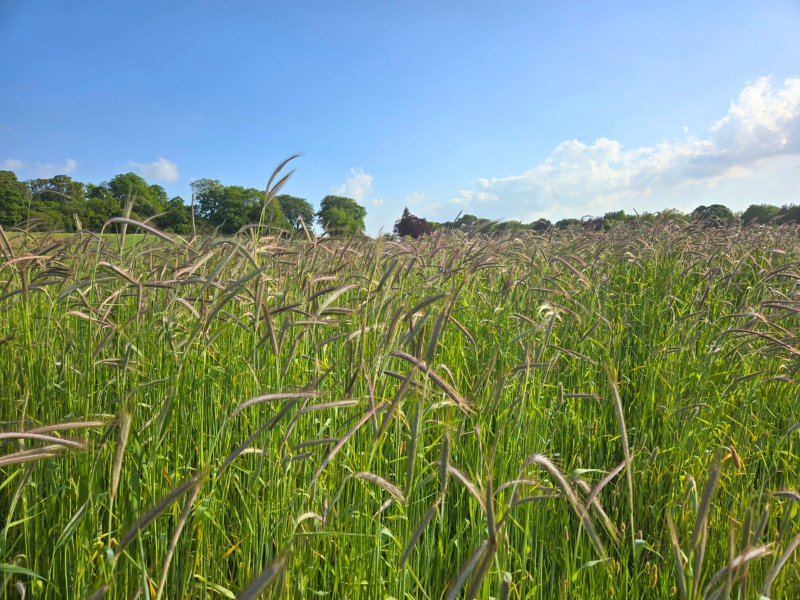
Hebridean Rye
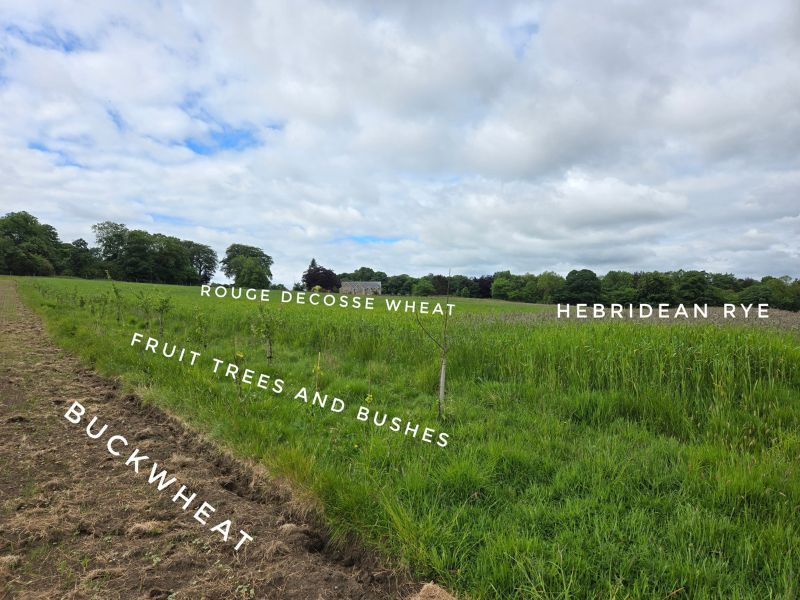
What’s Where in the Top Field
Progress in the Middle Field
You can see more field scale production in the middle field. If you’ve been on the farm recently, you might have seen one of the team out in our little blue tractor mowing (also called topping) the green manures. Seeding and maintaining long-term cover crops in this field is part of the long-term strategy for increasing food production on site. Whilst it may just look like grass, it’s actually a diverse cover crop we’ve sown to improve the soil and make it ready for future grain and veg production.
All farming and gardening affects other species. The idea of agroecological farming is that other species benefit from our activities, and the farm becomes a healthier ecosystem. This doesn’t take away the risk of an accident for individual animals who live at the farm. We’ve talked a bit more about the implications of farming alongside wildlife in this article Deer, Dogs, Birds and Fences – a Farm Conflict.
We Can Have a Food System that Doesn’t Cost the Earth
There are increasing numbers of people living in food poverty. The supermarket answer to this is ‘cheap’ food. But the low price on the shelf hides the cost elsewhere. It comes from exploiting workers and livestock, cutting variety, avoiding responsibility for pollution and other environmental damage, and farming so intensively that the soil gets exhausted. Food has become a free market commodity, and global businesses are looking for big profits.
However, farming is care work (or it should be).
And everyone deserves to be able to access nutritious food produced in environmentally responsible ways.
We know how to produce food in environmentally responsible ways. The challenge is the finances.
As a workers’ co-op, we’re not looking to make a profit, we just need to cover costs and wages. We have a skilled and dedicated team of growers who work well beyond their paid hours. But even the official hours are not covered by the income we get through sales of veg. And charging more would put it out of reach of more people. Some of this can be addressed through scaling and investment e.g. we invest in better kit to streamline processes, which reduces labour time. But what we really need is systemic change. On the way to that, policies like Universal Basic Income and a Basic Income for Farmers would make a huge difference.
Meanwhile, we’ve been able to do what we’ve done thanks to substantial funding, which steps into the gap, and pays off in the benefits to the local economy and ecosystem. Also we’re grateful to be joined each Tuesday by wonderful volunteers who come to lend muscle and help us get through a bunch of work we wouldn’t otherwise be able to do!
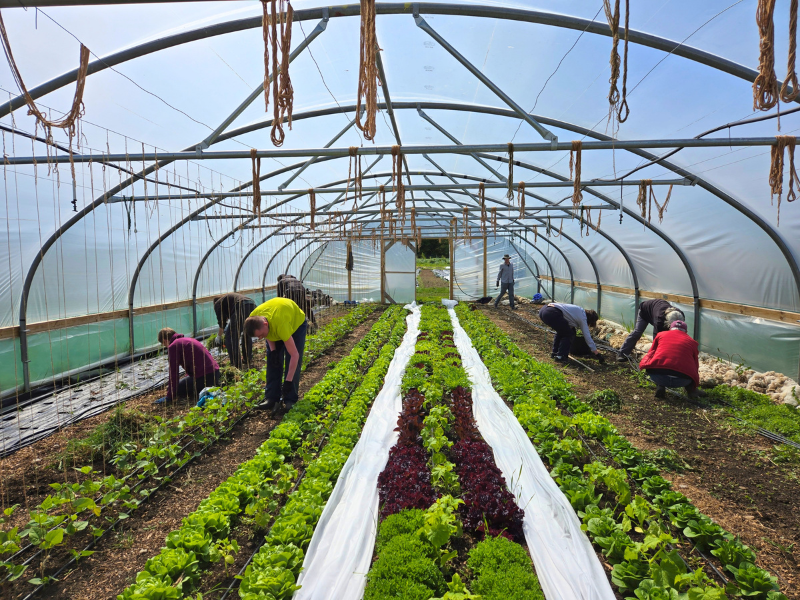
Glorious volunteers helping beat the weeds in the tunnels
This year has brought “record breaking” heat globally, and further exposed the fragility of the globalised food system, with crises in supplies and costs of fertiliser, food and fuel. The need to transition to agroecology is clear and urgent. We remain committed to figuring out how we can best contribute to that here.