
Farm News | November 24, 2026
Results of the Beewalk 2026
Volunteer Huw Pennell shares the 2026 bee survey results, and an update on bee support at the Farm…

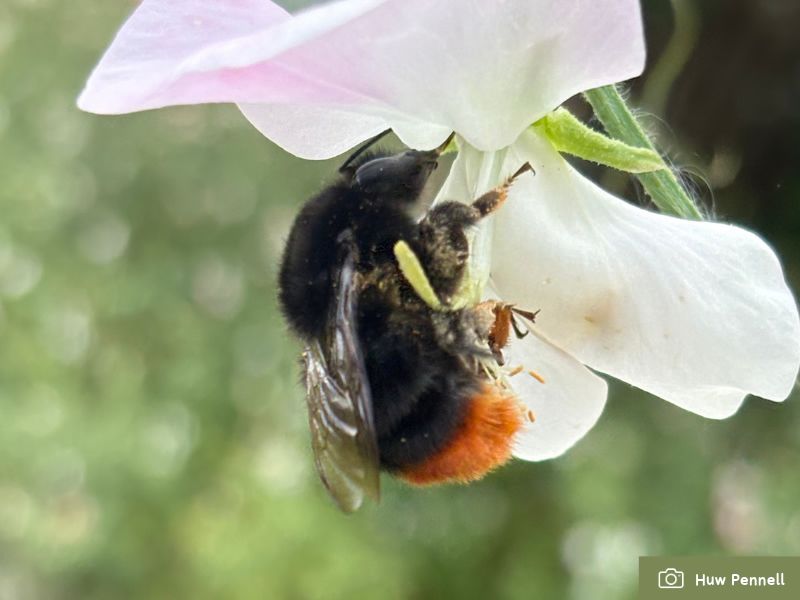
Following on from the Butterfly Survey Results, we caught up again with Huw Pennell, who also runs the Bumblebee surveys on the Farm as part of the UK-wide Bumblebee Conservation Trust Beewalk project. He has been counting bees on the Farm Boundary transect for the last four years. Last year, he also worked with Katie Smith to set up a second transect to monitor bumblebees in the allotment, hedgerow and market garden areas (the ‘Cultivated transect’).
How are bumblebee numbers this year?

Things have been up and down over the years of this survey. 2024 was a serious low, where we saw numbers decline by 41% but 2025 saw bumblebee recordings recover both nationally and on the Farm. The good news is that this year’s bright and warm Spring and Summer saw our bumblebee count for 2026 on the main ‘Farm transect’ at similar levels to last year (286 the vs 296 in 2025). We were not able to record data on the ‘Cultivated transect’ during August, so we are using the Farm transect data for direct year-on-year total comparisons, while using both transects’ data for species and monthly comparisons.
How were the conditions for bees in 2026?
The good Spring weather meant the overwintering bumblebee queens had good conditions for setting up their nests. They had a greater choice and quantity of pollinator plants in the crucial spring nest rearing period and then throughout the summer. This leads to larger and healthier nest populations. At the same time, the Farm’s regenerative farming practises (use of clover and other green manures) plus good quality pollinator crops and wild meadow areas are able to support the bumblebees further.
Which species fared the best?
There are 24 resident species of bumblebee in the UK. Almost 90% of the bumblebees recorded on the Farm belong to three species. The most recorded continues to be the ‘all ginger’ Common carder bumblebee, who tend to emerge a later in the Spring and be out longer across the rest of the season than other bees. The Common carder accounted for 48% of all recordings on the main Farm transect and 43% of recordings on the Cultivated transect. The second and third most recorded were the Buff-tailed bumblebee/White-tailed bumblebee combination. The workers (females) of these species are virtually indistinguishable in the field, so we count them jointly. These two species combined account for around another 40%.
The Red-tailed bumblebee is the fourth highest recorded on the Farm, although numbers are significantly lower. This species saw numbers in 2024 crash nationally by 72% and by 80% on the Farm compared to 2023 and their numbers recovered significantly in 2025. In 2026 their numbers were similar to 2023, but down on 2025.
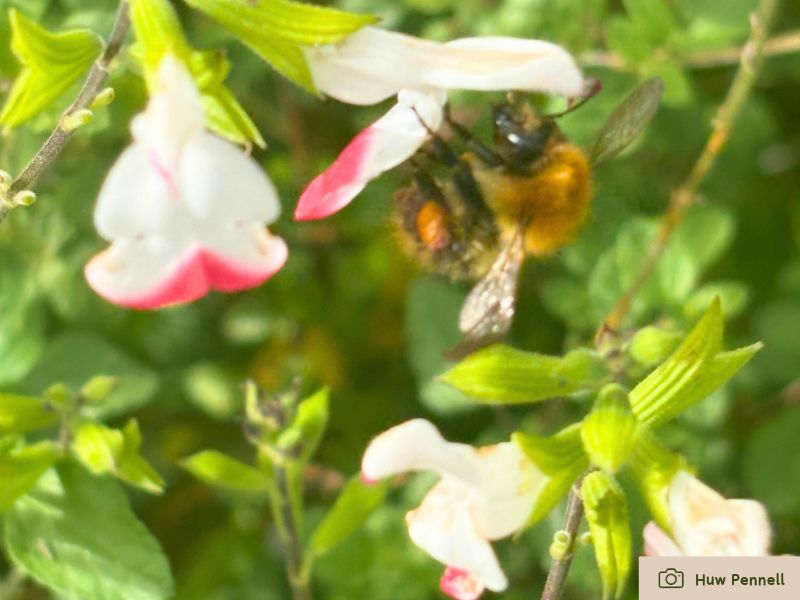
Common carder bee worker on Hot lips salvia (notice her pollen sac on her hind leg)
Other Bee News from 2026
On the farm we are actively aiming to support and encourage the local wild bee population. There are over 270 species of bee in the UK, of which the farmed honey bee is just one. In addition to the 24 species of bumblebee, there are close to 250 species of solitary bees, who are critical pollinators in their own right. Over the last two years, with entomologist David Notton, we have been supporting some of these species by adding Bee Hotels for the ariel cavity species like the Red mason bee in the Market Garden and Allotment areas. Bees continued to use the hotels in 2026, which is great to see. With the support of Agnes and her volunteer team, we also ‘rehomed’ the Bee Beds for the solitary mining bees to a new south facing area in the Allotments. This has a large grass Bee Bank, which has already attracted at least one bumblebee nest. The area also has some Goat Willow (a very important pollen source in the spring for the early emerging bumblebee queens) and small orchard trees, and is enclosed within hedgerows. The plan is to use this area to encourage and attract our local wild bees, and as a teaching space – for community education and training on pollinators.
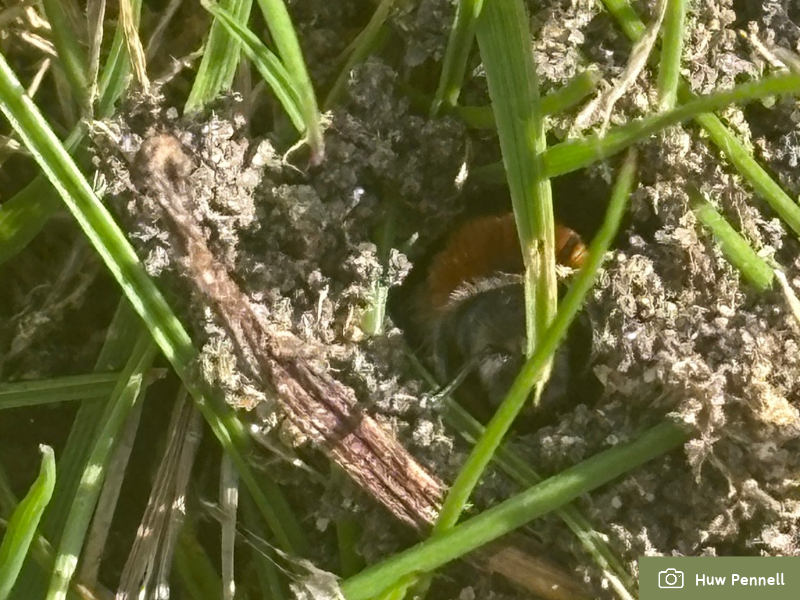
Example of an Orange-tailed mining bee in a burrow (not taken at farm)
Farm Bee Species
The seven ‘true’ bumblebees regularly recorded on the Farm are:
(Long tongued)
Common carder bee
Garden bumblebee
(Short tongued)
Buff-tailed bumblebee
White-tailed bumblebee
Red-tailed bumblebee
Early bumblebee
Small Garden bumblebee
Tree bumblebee
All of us at Edinburgh Agroecology Co-op are very grateful to Huw Pennell, Juliet Wilson and Guy Holloway (butterfly surveys), Katie Smith, David Notton, and the Community Garden and Allotment volunteers who have done crucial work to understand and support our bee and butterfly populations.
This year’s steady numbers are welcome. But we remember, this in the context of years of national and international declines in pollinator numbers. The landscape should be absolutely buzzing and it’s still all-too-quiet.
However, we have an opportunity here to create better conditions for life to flourish. We’ll be continuing our habitat enhancement work in 2027. If you’d like to get involved, click here to see the volunteering opportunities at the farm, or make a donation to support our work. If you have your own growing space, Lauriston Wildflowers can supply farm-grown wildflower plants to support pollinators.